Dinosaur profiles
Brachiosaurus: the dinosaur built to reach higher
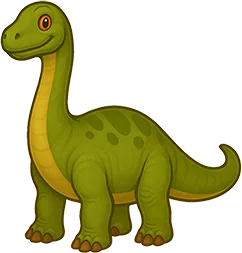
Start at the shoulders. This dinosaur’s front legs were longer than its back legs, giving its body a distinctive upward slope.
- Diet
- Plants
- Time
- Late Jurassic
- Found in
- North America
A different kind of giant
Brachiosaurus belonged to the sauropods, the group of long-necked, four-legged dinosaurs. Its raised shoulders and long neck helped it reach vegetation high above the ground. The Natural History Museum estimates its length at about 22 metres, but that is a reconstruction, not a measurement of a complete animal. The North American fossils are incomplete; some familiar reconstructions draw on its African relative Giraffatitan, once classified as Brachiosaurus.
Natural History Museum · BrachiosaurusA discovery in Colorado
In 1900, a Field Museum expedition led by Elmer Riggs found the fossil near Grand Junction, Colorado. Riggs later described and named Brachiosaurus altithorax. Those remains became the type specimen: the reference material attached to that scientific name. The discovery also became part of a museum collection that researchers can return to, rather than a puzzle solved once and put away.
Field Museum · Geology collections historyTry reading a skeleton
Next time you see a long-necked dinosaur in a museum, look at the shoulder and hip heights before reading its label. Then check which bones are original, which are casts, and which parts have been reconstructed. Ask yourself: does the display show one individual, or a carefully assembled interpretation? Those questions make a familiar dinosaur much more interesting.
Test your curiosity
Does an impressive museum skeleton always mean a complete fossil was found?
Reveal the answer
No. Check the exhibit label: a mounted skeleton can include casts and reconstructed parts. Brachiosaurus is a good reason to ask what the evidence actually preserves.
Go straight to the evidence.
Explore the references behind this introduction. Sources checked October 2, 2026. New fossil discoveries can change scientific interpretations.
Have a correction? Contact HALUDOS.